
A story about houses, memory, and who lived here before you.
I’ve never knocked on the door of any of my childhood homes.
I’ve driven past them. Slowed down. Sat in my car long enough that I probably looked suspicious. 715 Pine Street in Philadelphia, where I spent my first dozen years. 228 Gregory Court in Moorestown, where I became whoever I became between twelve and twenty-one. I’ve looked at the windows and tried to remember what was on the other side of them. But I’ve never knocked.
Except in dreams. In lucid dreams, I walk right in. The doors open like they always knew me.
I’ve thought about why that is. I think it’s because I’m afraid the inside won’t match the version I’ve been carrying around. And that version — the one in my memory — is the one I want to keep.
But this story involves someone who knocked.
We had bought the farmhouse in the early nineties. It sat on what had once been a hundred acres in Bucks County, Pennsylvania — subdivided down over generations until we got our 1-½ acre piece of it, the old stone house, and a two-story barn whose slate roof sagged in the middle like it was a bit tired.
As a housewarming gift, my mother-in-law obtained property deeds going back some 200 years. Nicely bound photocopies, a long chain of dates and names — James and Elizabeth Pool. George Brunner. John and Martha Mann. Conrad Sherer. Philip Wodock. A parade of strangers who had all, at some point, called this place home.
They were just names to us. Historical, a little mysterious. Hints of lives lived.
Then one afternoon, 5 years into living there, there was the aforementioned knock at the front door.
Now — if you’ve ever lived in a farmhouse, you know that nobody knocks on the front door. Friends come around back. Family comes around back. Delivery people come around back. The front door knocker is basically decorative.
So I opened it with some curiosity.
Standing there was a young woman, maybe mid-twenties. She had a radiant smile and the slightly apologetic look of someone about to ask an unusual favor. I wondered: Lost? Car trouble?
She said, I hope you don’t mind. I know this is odd. I just dropped my dog at the vet down the road — I have an hour to fill — My grandparents lived in this house. I used to spend summers here. I was wondering if I could just… sit in the yard?
I said, absolutely. But first, come in. Tell us everything.
She shared that her grandparents were Joan and Douglas Warner. (Names I recalled from the deeds.) Doug had passed. Joan was very much alive, sharp as a tack, living in Cape May.
No kidding! We are heading to Cape May in two weeks for a vacation.
She lit up. You should go visit Grandma Joan.
We laughed. We said, well, we’d need to let her know we were coming.
She said, Oh, you don’t need to call. Here’s her address. Just stop by. She’d love it.
So we sent a postcard — which felt right somehow, a postcard to a stranger about mentioning the house we both loved — and we told her we’d be in the neighborhood and suggested a time on a Saturday.
Joan lived on a sleepy, tree-lined street in Cape May. We arrived with our daughter Isabel, a toddler at the time.
We walked into Joan’s living room, and there on the wall — among the family photographs — was a watercolor painting. Of the front of our house. Painted with obvious love and real skill.
I pointed to it and said with a grin, I know that place. But those two big trees — they’re gone now.
Joan smiled. Douglas painted that. He was an artist.
She told us his career had been doing graphic design for the Burpee Seed Company — which had once been just up the road from our farmhouse. He did the illustrations for the seed packet covers. Watercolors of tomatoes and sunflowers and sweet corn. Beautiful, careful work, Joan reminisced.
And then she said: He worked out of the barn.
I smiled. I had a graphic design business. And I was running it out of that same barn.
When I renovated the space to add power and connectivity for all those computers and printers, I’d found scribbles on the studs beneath vintage paneling. They now made sense: darkroom sink hook up. Stat machine power.
And now, standing in Joan’s living room in Cape May, it all snapped into focus. Doug Warner had stood in that barn. Had watched the light come through those old windows. Had made things there. And then, decades later, I came along and did the same thing.
Isabel, meanwhile, was doing what two-year-olds do — picking up everything on every table and examining it with the focused intensity of a museum curator.
We kept apologizing. Joan kept waving us off.
She said, Isabel can play with anything she likes. I’ll go make some iced tea. How do you take it?
And just like that, we were family. We spent the afternoon in the back flower garden, listening to Joan tell stories — about Doug, about the house, about summers and winters, and the particular quality of the light on that property in October. We left feeling like Joan might have been our grandmother too.
Isabel is thirty now.
She’s living on the West Coast, starting her own family. When I think about that afternoon in Cape May — this little girl picking up Joan’s mementos and keepsakes, Joan not worried at all, just going to make the iced tea — I feel the passage of time in a way that’s hard to describe. I imagine Isabel carries that afternoon somewhere in her body, even if she can’t remember it.
Might houses be like that? Do they hold what happened in them, even when the people who lived there move on?
I lived in that farmhouse for twenty-five years.
I left it in circumstances I won’t go into except to say the house stayed with my ex-wife as part of our divorce settlement. She sold it about a year later. I heard a couple from Brooklyn bought it.
I haven’t been back.
I’ve thought about driving past. Slowing down. Looking at the windows, the way I looked at Pine Street. At Gregory Court. Trying to see through to the other side.
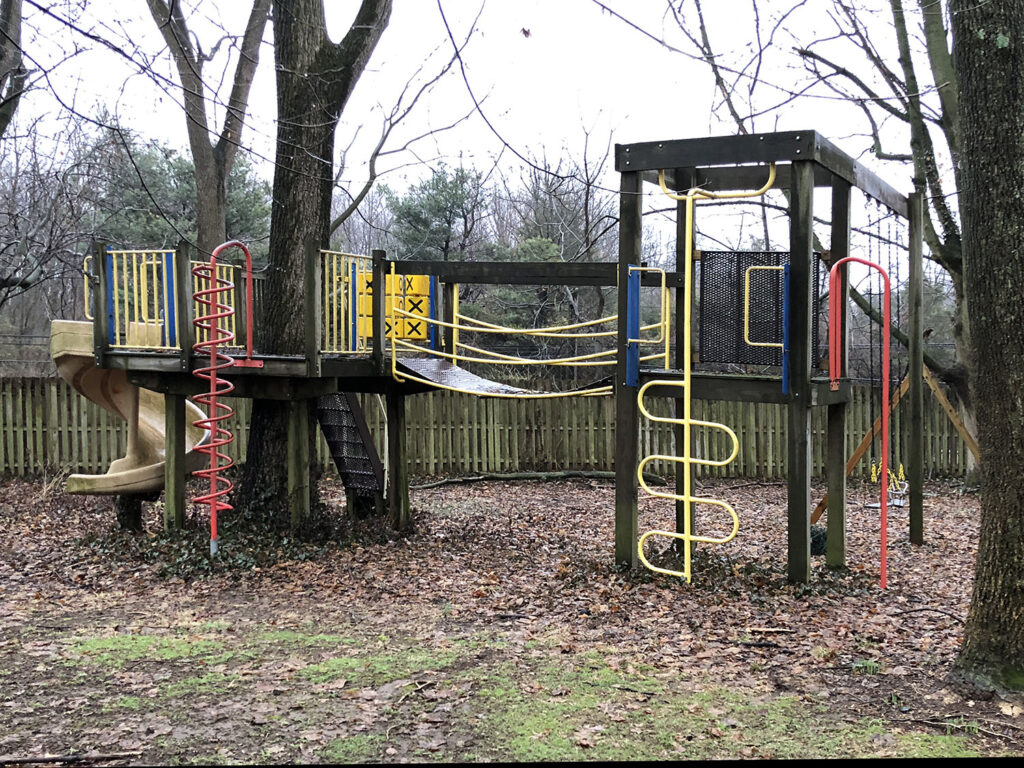
But I can’t bring myself to do it yet. I have a version of that house in my memory — Both my kids lived their entire childhood lives there. Running their hands along the deep, cool stone walls of the house. Playing Pirates and Fairies in the backyard tree house I built from salvaged materials. The hand-painted tiles and sinks in their shared bathroom. The way the light came in through the old lead-glass window panes, illuminating the murals the kids painted on their bedroom walls, with their names signed at the bottom. Isabel and Sophie.
I want to keep that version.
Back to that couple from Brooklyn living in the house. One day — maybe on a Saturday afternoon, when they’re least expecting it — there might be a knock at the front door.
Not the back. The front.
And someone will be standing there with a radiant smile and a slightly apologetic look, and they’ll say: I know this is odd. But I used to spend time here. Would it be alright if I just sat in the yard?
And I hope — I really hope — that whoever answers that door says: Absolutely. But first, come in. Tell us everything.
